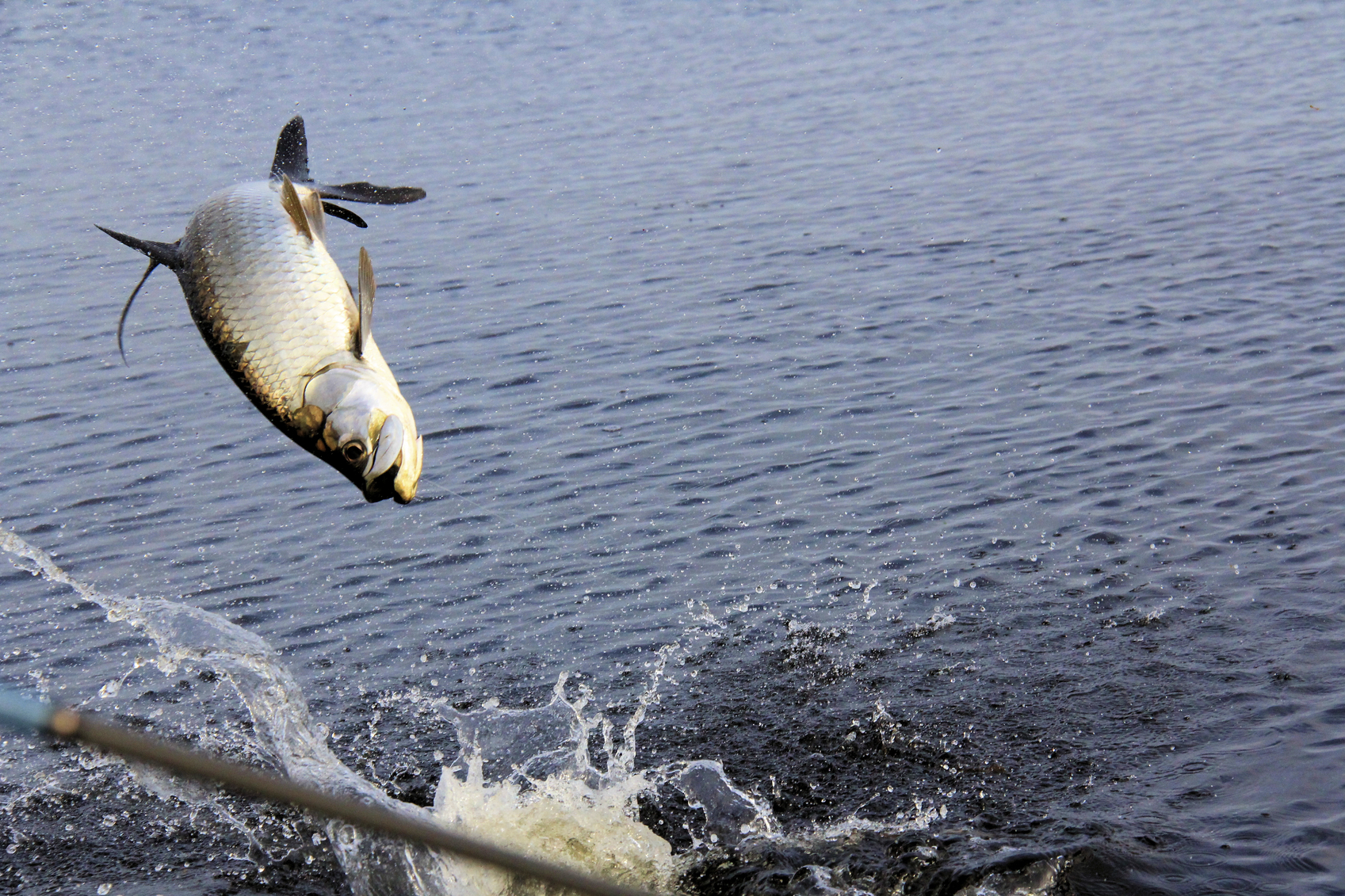
Every May, something extraordinary happens at Boca Grande Pass.
The tarpon arrive.
They come in the thousands — massive, prehistoric fish with silver flanks and enormous scales, rolling on the surface, pushing through the deep channel that separates Gasparilla Island from Cayo Costa. Some weigh well over 100 pounds. Some have been making this same migration for longer than most of the people watching them have been alive. And for a few months each year, this narrow pass at the southern tip of Gasparilla Island becomes the most famous stretch of fishing water in the world.
Boca Grande has been called the Tarpon Capital of the World, and that’s not marketing copy. It’s a title earned over more than a century of pursuit by anglers, guides, and conservationists who have made the annual tarpon migration the defining event of the island’s year.
What Is a Tarpon?
If you’re new to the world of sport fishing, a quick introduction is in order.
The Atlantic tarpon (Megalops atlanticus) is one of the most ancient fish species on earth. Fossil records suggest they’ve existed largely unchanged for over 100 million years. They’re extraordinary in several ways: they can breathe air, gulping oxygen directly from the surface through a modified swim bladder. They can survive in both fresh and saltwater. And they grow to enormous sizes — adult tarpon in Boca Grande regularly exceed 100 pounds, and fish over 200 pounds have been caught in the pass.
From a fishing standpoint, tarpon are prized not for their table quality (they’re virtually never eaten) but for their fighting spirit. A hooked tarpon is a spectacle: it leaps repeatedly from the water, shaking its massive head, throwing the lure, and stripping line with terrifying force. Landing a Boca Grande tarpon is considered a benchmark achievement for serious saltwater anglers anywhere in the world.
When Does Tarpon Season Run?
The main tarpon season at Boca Grande runs from approximately late April through July, with peak action typically occurring in May and June. During these weeks, the pass sees some of the densest concentrations of tarpon found anywhere on the planet. Fish stage in the deep water of the channel, waiting for favorable tides before continuing their migration northward.
Late season fish — smaller “juvenile” tarpon and migrating adults heading south — can be found from August through October, and some tarpon remain in the area year-round, though in far smaller numbers.
The peak of peak season, roughly Memorial Day weekend through mid-June, is when the island comes most alive with anglers and spectators alike.
The Pass: What’s Happening Below the Surface
Boca Grande Pass is one of the deepest natural passes on Florida’s Gulf Coast, dropping to over 70 feet at its deepest point. That depth, combined with powerful tidal flow and a healthy prey base, makes it a natural staging area for tarpon. The fish concentrate in the channel, feeding on crabs (particularly pass crabs, which drift through on the tide) and resting before continuing their migration.
During peak season, the pass is crowded with charter boats, private vessels, and spectators on the beach and at the lighthouse. If you’re not fishing, watching the activity in the pass from shore is an entertainment experience in itself — dozens of boats holding position over the channel, tarpon rolling on the surface, and occasionally, the explosion of a fish going airborne 100 yards offshore.
Experiencing Tarpon Season Without Fishing
Here’s something the fishing guides won’t tell you: you don’t have to be an angler to have an incredible tarpon season experience on Gasparilla Island.
Watch from the Lighthouse Beach The beach near the Boca Grande Lighthouse offers some of the best vantage points on the island for watching tarpon activity in the pass. On calm days, you can see fish rolling on the surface from the shore. During early morning hours, before the charter fleet gets out there, the pass can be hauntingly beautiful — birds working the rips, fish rolling, the distant sound of water moving through the channel.
Kayak the Edges During tarpon season, fish are present not just in the main pass but throughout the surrounding waterways. Tarpon regularly move through Charlotte Harbor, cruise the grass flats on the inside of the island, and stage in the cuts and channels accessible by kayak. A guided kayak tour during tarpon season offers the possibility of encounters with rolling fish from a completely different perspective — up close and at water level, with no engine noise to scatter them.
Rent a Golf Cart and Follow the Action The southern end of Gasparilla Island, accessible by golf cart along the Rail Trail, puts you close to the action without requiring a boat. The area near the lighthouse and the old fish house is particularly active during tarpon season, with anglers, guides, and spectators concentrated along the southern tip.
Visit the Port Boca Grande Lighthouse Museum The lighthouse complex includes exhibits on the island’s fishing heritage, including the history of tarpon fishing at Boca Grande that stretches back to the late 1800s. Wealthy sportsmen began arriving via the railroad in the early 20th century, and the traditions they established are still very much alive today.
Fishing Tarpon at Boca Grande: The Basics
For those who do want to fish, here’s a primer on how it works.
Charter vs. Private Boat First-timers should strongly consider hiring a licensed guide. Tarpon fishing at Boca Grande is technical, the pass is crowded during peak season, and the unwritten rules of the water are complex. A good guide handles navigation, rigging, and etiquette, and dramatically increases your odds of catching and releasing a fish.
What to Expect on a Charter Most charters run half-day or full-day trips. You’ll spend time holding position over the channel, presenting live or dead crabs on the tide, and waiting. Tarpon fishing requires patience — but when a fish strikes, the patience is instantly rewarded. Even on slower days, the experience of being in the pass during peak season, surrounded by fish and fellow anglers, is memorable.
Catch and Release Tarpon must be released alive in Florida. The species is strictly protected; there is no harvest season. Guides and anglers take this responsibility seriously, and best practices for quick, safe releases are followed by reputable operators.
Conservation Boca Grande’s tarpon fishery has been the subject of significant conservation attention over the decades. Catch-and-release practices have become standard, and advocacy organizations work to protect the pass from threats like boat traffic during peak spawn. As a visitor, you can support these efforts by patronizing conservation-minded guides and following leave-no-trace principles on the water.
Planning Your Tarpon Season Visit
When to Come: For peak tarpon activity, aim for the last two weeks of May or the first two weeks of June. This is also the busiest period on the island, so book accommodations and activity rentals well in advance.
Where to Stay: The island has limited but charming lodging options, from the historic Gasparilla Inn (one of Florida’s great old resort hotels) to the great flats hosted by Grande Flats (www.GrandeFlats.com).
Getting There: Boca Grande is roughly two hours from Tampa and one hour from Fort Myers via the Boca Grande Causeway. A small toll is charged to access the island.
What Else to Do: Even if tarpon fishing isn’t your primary reason for visiting, tarpon season is one of the best times to be on the island. The energy is palpable, the weather is warm, and every activity — from golf cart tours to kayak rentals to beach days at the lighthouse — is enhanced by the spectacle happening in the pass.
The Tarpon Capital of the World
There are other places to catch tarpon. Florida’s west coast, the Florida Keys, Costa Rica, and a handful of other destinations all have their tarpon fisheries. But Boca Grande Pass is in a category by itself — a concentration of fish, tradition, history, and natural drama that has no equal. Anglers save for years to make the trip. Families plan vacations around the season. Guides build entire careers here.
If you’re visiting Gasparilla Island during May or June, you’re arriving at exactly the right time.